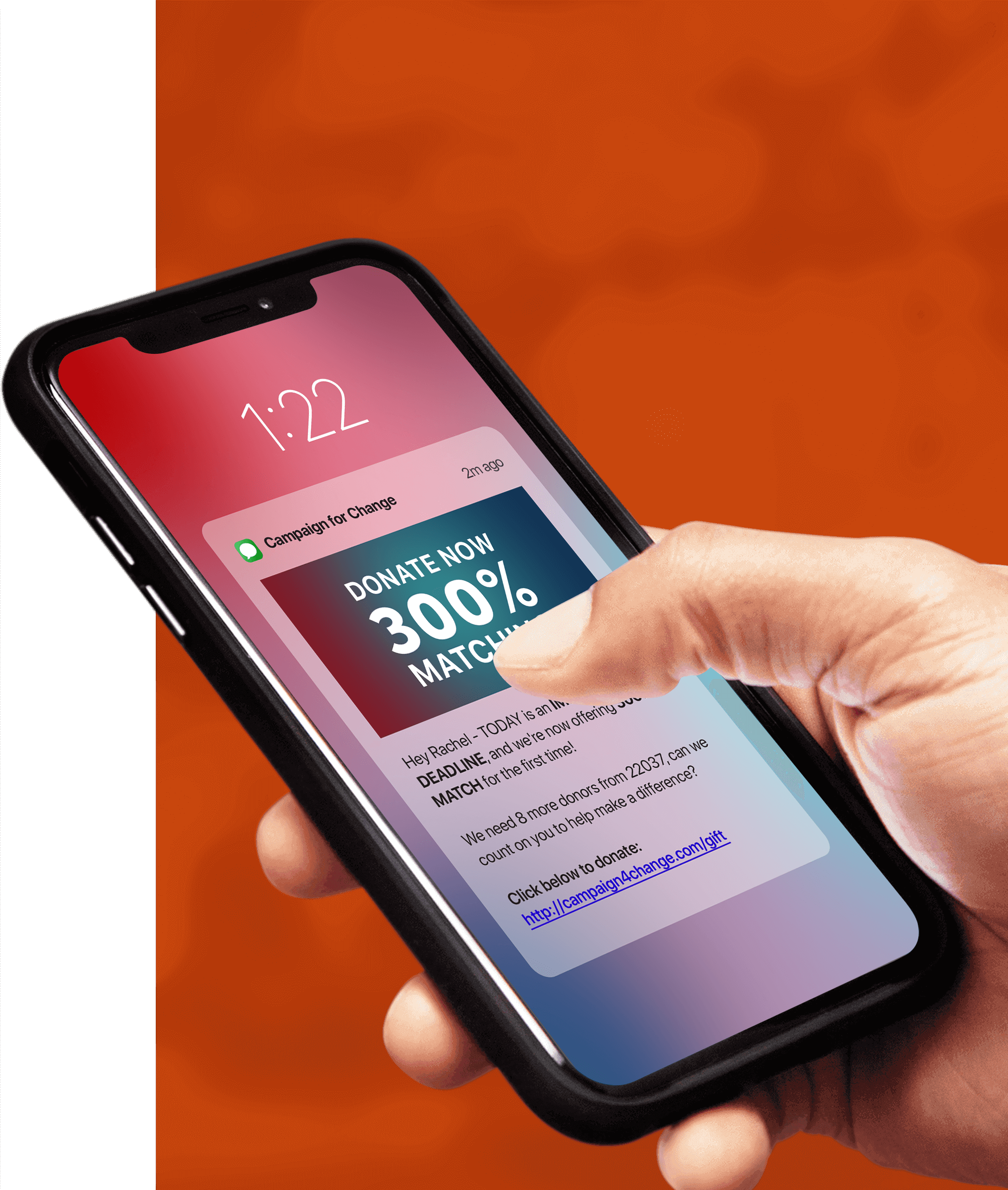
Adding text messages to your nonprofit’s communication strategy helps you maximize open and read rates. You can reach supporters wherever they are, right from their phones. But first, you need a registered phone number to text from. That’s where SMS short codes come in.
In this guide, we’ll cover the ins and outs of text message short codes so you can start leveraging this channel as soon as possible. We’ll discuss:
- FAQs About SMS Short Codes
- Types of SMS Short Codes
- Benefits of Short Codes for Texting
- Example SMS Short Code Use Cases for Nonprofits
- How to Get Short Codes for Text Messaging
Whether you want to unlock text-to-give fundraising or streamline volunteer communication with texts, a short code will make your work easier.
FAQs About SMS Short Codes
What is an SMS short code?
An SMS short code is a 5- to 6-digit phone number (such as 23456 or 700-700) designed for mass texting. Short codes allow organizations to communicate via text message with stakeholders such as donors, customers, volunteers, and beneficiaries. Nonprofits can text supporters who have given their consent to receive messages, and supporters can text an organization’s short code to quickly get in contact with them.
Short Codes vs. Other Options
Besides text message short codes, you can also leverage mass messaging 10DLC, sometimes called “long codes.” Let’s break down the difference between the two types of texting codes:
- Long codes have 10 digits and tend to be more affordable, making them a good option for smaller nonprofit organizations or those that need to start texting quickly. You can get a long code in just a few weeks.
- Short codes have 5 to 6 digits and are often the best option for larger nonprofit organizations, since they’re designed for high-volume mass messaging and appear more professional. However, they take longer to attain and have higher fees.
SMS short codes also feel more legitimate to audiences, reducing the risk they mark your messages as spam and helping you build trust with supporters. And unlike full-length phone numbers or social media handles, short codes only require your audience to remember 5 or 6 digits and your keyword. If you make both of these values catchy and easy to memorize, you can prompt more signups.
Short codes come with plenty of benefits, but ultimately, the best choice for your nonprofit will depend on your needs, size, and budget.
Who uses SMS short codes?
Nonprofits, businesses, and organizations of all types use SMS short codes to streamline mass texting and instill trust in their audiences. While nonprofits often use short codes to text donors about fundraisers, impact updates, and involvement opportunities, businesses might leverage texts to promote deals, engage customers, and collect product feedback.
At Tatango, we work with nonprofit organizations of all sizes, with a variety of missions. No matter how small or large your organization is, you can increase your impact with SMS.
Why are SMS short codes important for nonprofit fundraising?
Traditional outreach methods and marketing channels are no longer working—email engagement is down, the cost of direct mail is rising, and social media algorithms are ever-evolving and filled with AI spam. SMS short codes help nonprofits cut through the noise and ensure their messages reach and engage supporters.
SMS short codes offer a direct line to your audience, anytime, anywhere. All your donors have to do to engage with your organization is text a short, memorable phone number. By using keywords, they can quickly donate to your cause, sign up for an event, or receive more information about a particular campaign.
From boosting engagement with personalized messages to engaging in real time with event guests, using short codes helps keep your nonprofit top of mind and maximize donations.
What is a short code service provider?
A short code service provider is a company that helps your organization lease a dedicated SMS short code. These providers simplify and speed up the process of obtaining a short code so you don’t have to go directly to the U.S. Common Short Code Administration (CSCA). For instance, Tatango helps nonprofits get the short codes they want during onboarding, navigating the entire process for you.
How much do SMS short codes cost?
SMS short codes are leased at a flat monthly rate determined by the CSCA. Currently, the CSCA charges $500 per month for random short codes and $1,000 per month for vanity short codes. Some service providers charge additional fees, however, so be on the lookout. Tatango customers pay only the flat fee for short codes with no additional markup.
How long does it take to get a short code?
Typically, leasing a short code for your organization and getting carrier approval can take up to six to eight weeks. However, the experienced team at Tatango can speed up the process so you can start texting sooner.
Types of SMS Short Codes
There are two main types of shortcodes that nonprofits can use to send text messages, and the choice between them can significantly impact your recall and engagement rates. Here’s a quick overview of the differences:

Random
A random/generic short code is a randomly assigned number that has no specific relevance to your brand (e.g., 19365, 493573, 49930, etc.). These short codes are less expensive and easier to obtain, but they may be harder for your supporters to remember. Most SMS short codes are random since they’re cheaper.
Vanity
A vanity short code is a specifically chosen phone number (e.g., 11111, 411411, 12345, etc.), typically chosen for its memorability and brand awareness.
Vanity short codes tend to be easier for consumers to recall because they have a more cohesive set of numbers. For example, if you’re driving by a billboard and see a company’s short code, you’re more likely to recall a vanity short code because the numbers seem to go together. This makes it much easier for supporters to subscribe to your organization’s messages. However, vanity short codes are more expensive.
Benefits of Short Codes for Texting
Using short codes for texting rather than long codes or other communication channels offers organizations numerous advantages, such as:
- High open rates. SMS messages are known to have upwards of a 99% open rate and a 90% read rate, which is far higher than any other digital marketing platform (especially compared to email’s 22% open rate).
- User-friendly interface. SMS short codes are straightforward and user-friendly, even for audience members without tech experience. All they have to do is text a short keyword to your number, and they’ll be connected to your organization.
- Predictable cost. The U.S. Common Short Code Administration (CSCA) makes SMS short codes available to organizations at a flat rate. Tatango customers pay this fee with no additional markup. This makes it easy for your organization to account for short codes in its marketing budget.
- Quick messaging timeframe. With SMS short codes and the right texting provider, you can send 98,940 text messages per minute. Reach thousands of supporters and communicate urgent information immediately.
- Professionalism and trust. Audiences trust short codes more than 10DLC numbers. If you choose a vanity short code, you can also maintain brand consistency by texting from a number that corresponds to a word that’s relevant to your organization.
- Built for large-scale use. SMS short codes are made for businesses and mission-driven organizations that have many people to contact.
- Real-time analytics. If you work with the right SMS provider, you can easily track important metrics like text open rate, click-through rate, conversions, and opt-in rate.
Example SMS Short Code Use Cases for Nonprofits
Once you have a dedicated short code, there are countless ways you can use it to connect with supporters and further your nonprofit’s goals.
SMS short codes can transform your communications and help you drive results across every aspect of your nonprofit’s operations. Specifically, messaging with an SMS short code can help you with:
Fundraising
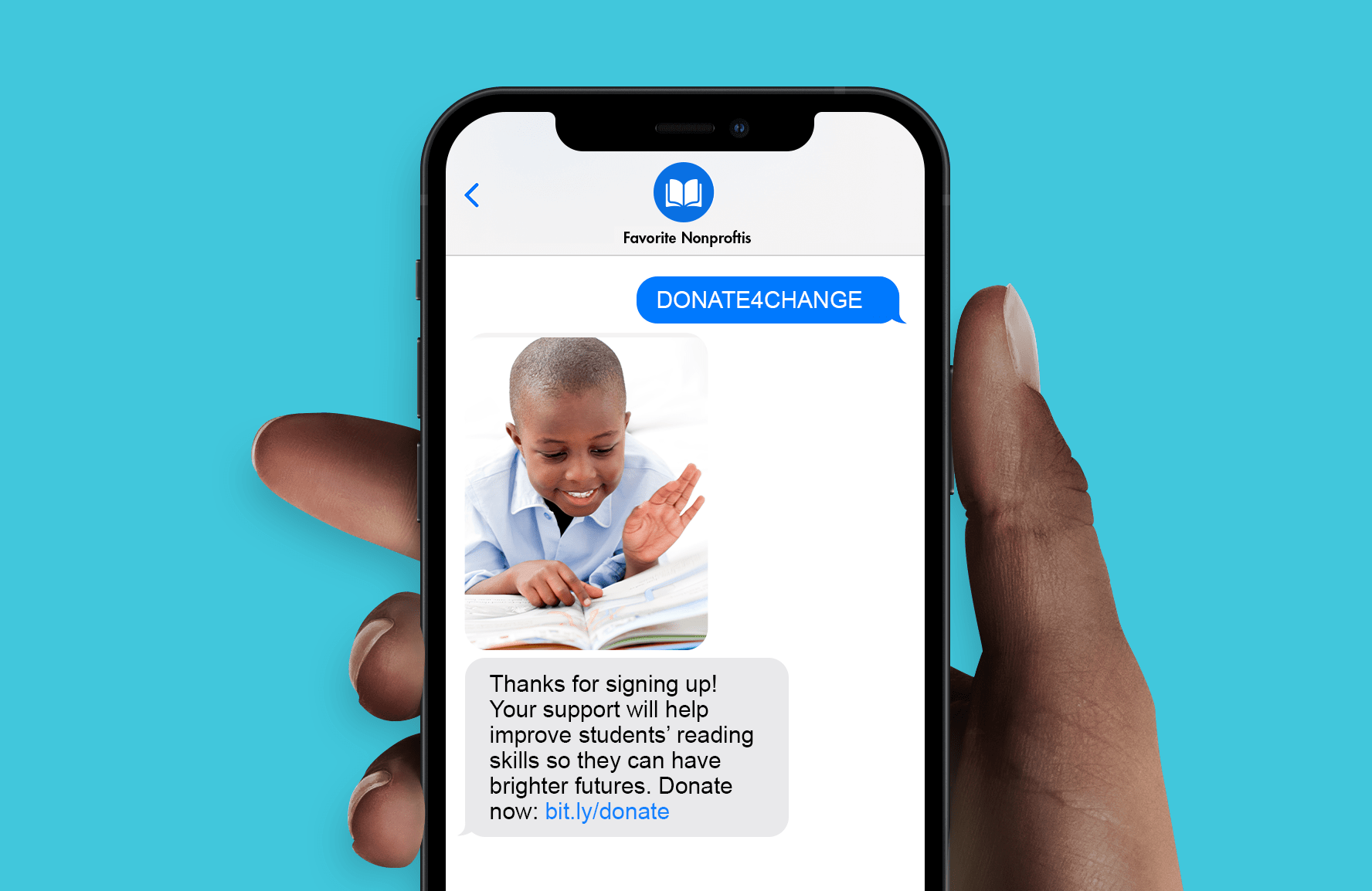
All of your marketing channels should support the fundraising process, and text messages’ role is to drive instant engagement that drives action. Share fundraising campaigns, build excitement, and ask for donations directly via text to boost your fundraising revenue.
Donor Engagement
Keep in touch with donors and supporters with personalized text messages. Supporters can also respond in the same thread, adding an interactive element that other platforms lack. Answer donor questions, ask for feedback, or just have conversations to improve relationships.
Impact Storytelling
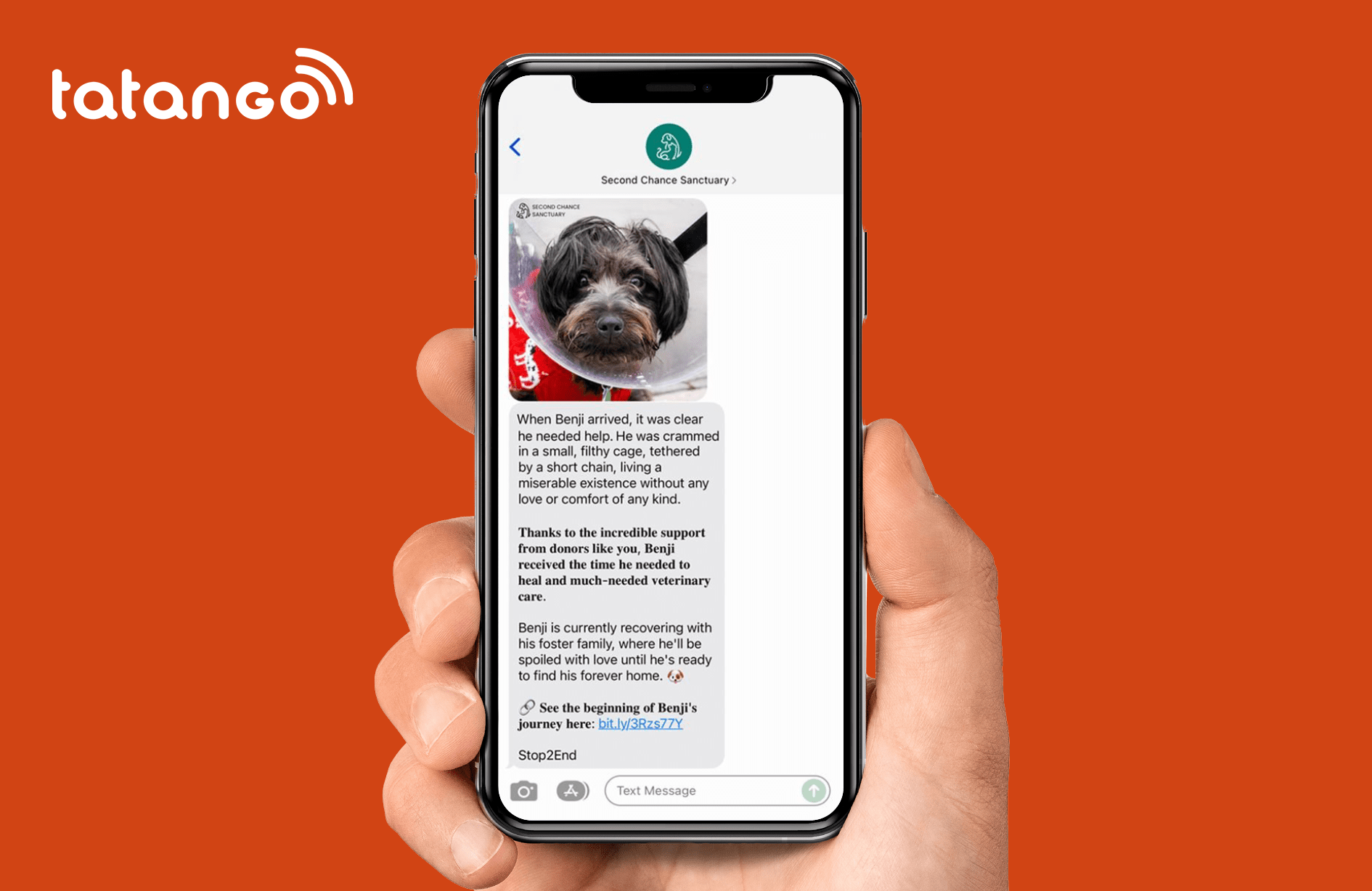
Texts are great for communicating short stories of impact that resonate with supporters. For instance, take a look at the example above, in which a nonprofit animal shelter sends a photo and text update about Benji, a dog their donations helped save.
Nonprofit Marketing
Bulk text messages are a fast marketing channel with a personal feel, and SMS short codes ensure your messages look professional rather than spammy. Market your nonprofit’s fundraisers, awareness campaigns, merchandise sales, and more via text.
Event Promotion
Your events have many moving parts, so being able to communicate with guests quickly is crucial. SMS allows you to reach attendees and volunteers right away, wherever they are. You can even message guests during events to boost engagement.
Volunteer Communication
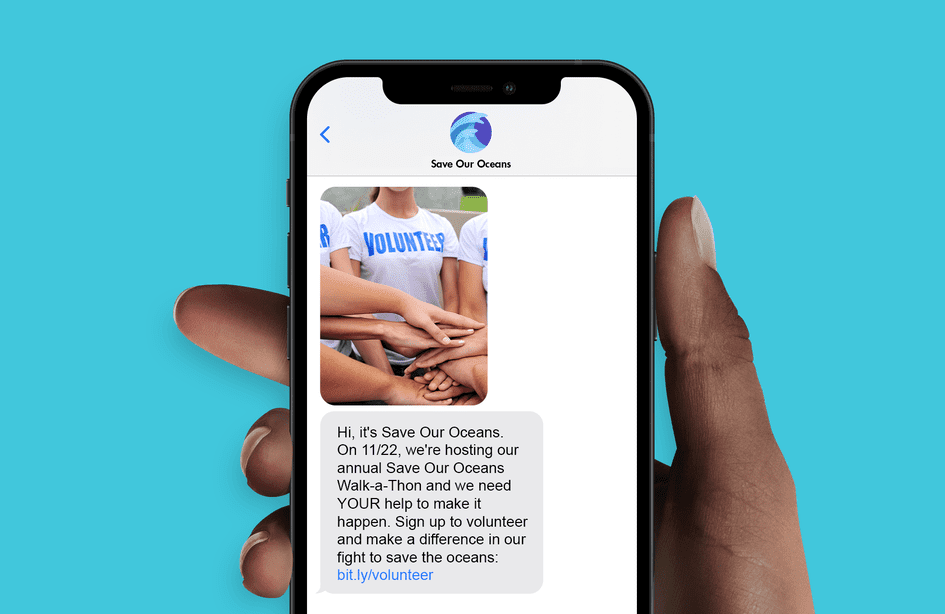
Volunteers are valuable members of your nonprofit’s team, and they require fast, highly personal communication. Text volunteers when a shift opens up, let them know about a location change, or send them a heartfelt thank-you message after an event.
Alerts and Notifications
Share everything from major announcements about your work to individual alerts that a recurring donor’s payment method is about to expire. You can rely on texts to send urgent notifications and updates to supporters.
Feedback Collection
Sometimes, filling out a long survey is too much to ask of donors and event guests. To save time and boost response rates, give supporters the option to provide feedback via text instead. They can respond to your message with quick yes-or-no answers or a full paragraph.
How to Get Short Codes for Text Messaging
The process of acquiring a short code for texting is easy with the right help. Follow these steps to get started.
1. Partner with an SMS provider like Tatango.
Although it’s possible to go directly to the CSCA and secure a code for your organization, the process is challenging. You’ll have to navigate the requirements and set up an account yourself, which is confusing and time-consuming.
Fortunately, there’s an easier, faster alternative: working with Tatango. Our team can add efficiency so you can start texting sooner. The experts at Tatango know how to get the short codes you want quickly. During onboarding, your customer support manager will help you navigate the entire process, choose the best option for your needs, and ensure you’re set up for success when you begin texting your supporters. Plus, we work specifically with nonprofits, so all of our texting services are designed to meet your needs.
2. Choose which type of SMS short code you want.
Next, determine which type of SMS short code will work best for your nonprofit. If you’re unsure, ask yourself these questions to guide your decision:
- How will SMS factor into our existing marketing strategy? Do you already have a clear idea of how you want to use SMS? If so, does your strategy require a memorable, brand-relevant short code, or will any number work?
- What’s our allocated budget for SMS short codes? It’s easy to predict how much your SMS short codes will cost based on the U.S. Short Code Registry’s flat rates to lease them. Estimate which price point works best for your budget and needs.
- Do we have a specific 5-6 letter word in mind that speaks to our brand? For example, a nonprofit called The Shine Foundation might want the short code 74463 to spell SHINE.
Based on your answers, decide if you want to invest in a random or vanity short code. If you choose vanity, be prepared to provide your ideal short code and a few backups. Vanity short codes have limited availability, so you may not be able to get your first choice.
3. Obtain a code from the CSCA.
The CSCA is the only governing body that has short codes and can lease them to brands. Rather than obtaining short codes on your own, which can feel overwhelming and confusing, remember that Tatango can guide you through this process from start to finish.
4. Apply for approval with carriers.
Before using your new short code, wireless carriers must approve it. This is another process that your SMS provider should handle for you. Getting approval can take several weeks, since carriers may have questions about your brand or provisions to make before you get approved. However, Tatango ensures you get approved by carriers as soon as possible.
5. Test and start using your SMS short code.
Once approved, it’s time to start texting! Make sure you understand the legal regulations in place for SMS short codes, such as the Telephone Consumer Protection Act (TCPA). The right text messaging provider will help you ensure your messages are compliant, but it’s ultimately your organization’s responsibility.
As with any marketing tool, there are best practices to follow and potential pitfalls to avoid. Design a text messaging strategy that follows these core dos and don’ts to maximize your texts’ impact.
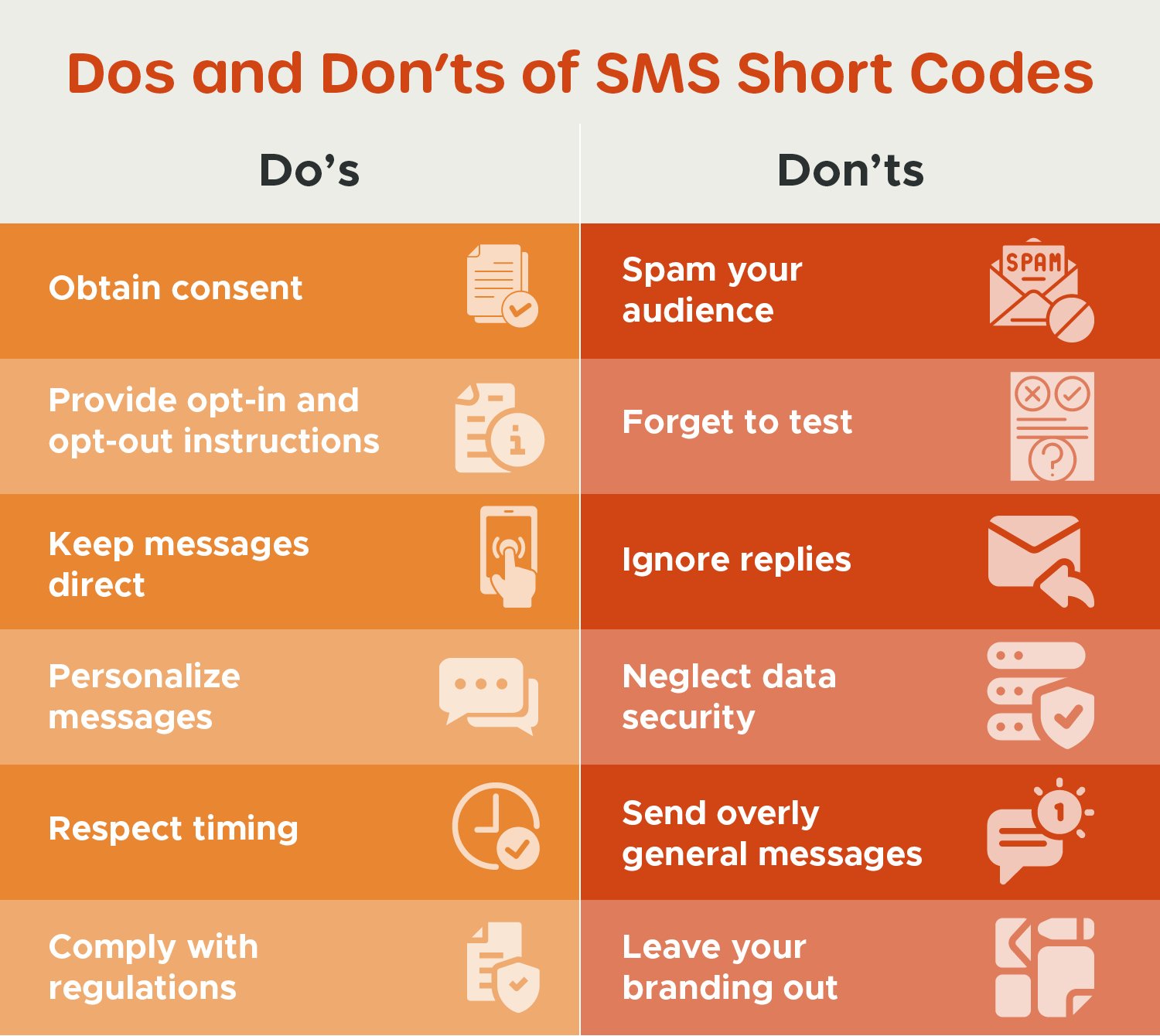
Here’s what you should do:
- Obtain consent to contact your supporters, typically by prompting the recipient to respond with “YES” if they’d like to opt in.
- Provide opt-in and opt-out instructions, like “Reply STOP to opt out,” on all sign-up forms and at the end of your texts.
- Keep messages direct and impactful.
- Personalize messages using your text fundraising software.
- Respect timing (i.e., only text during the day and respect holidays).
- Comply with regulations like the TCPA.
Meanwhile, make sure you don’t:
- Spam your audience with too many messages.
- Forget to test out different keywords and messaging tactics to find the approach that works best for you.
- Ignore replies when stakeholders respond to your texts.
- Neglect data security, like PCI compliance and other data protection best practices.
- Send overly general messages without a clear purpose.
- Leave your branding out—remind supporters each time that the text is from your organization.
Like any other marketing strategy, it might take some trial and error to hone your texting approach. However, taking these tips into account puts you in a good position to create results you can count on.
Enhancing Your Messages with Short Codes
SMS short codes can completely transform the way you conduct outreach. By embracing this tool, you can significantly enhance your communications, build stronger relationships with supporters, and amplify your mission. If you’re ready to get your nonprofit started with an SMS shortcode, contact the team at Tatango today.
Want to learn more about SMS communications first? Check out these resources:
- Nonprofit Text Messaging: How to Reach Your Audience. Need help navigating the text fundraising world as a nonprofit? This guide will help you launch your efforts with confidence.
- 13 Ways You Can Use Nonprofit SMS to Further Your Goals. The use cases for texting with SMS short codes are endless. Discover more ways to engage your audience with texts here.
- How Does Text-to-Give Work? A Complete Guide for Fundraisers. Text-to-give is a powerful way for nonprofits to raise money via text message. Learn more in this crash course guide.
 Mike Snusz, Director of Nonprofit Customer Experience
Mike Snusz brings nearly two decades of digital fundraising expertise to his role as Director of Nonprofit Customer Experience at Tatango, the industry’s leading text messaging platform for nonprofits. A recognized thought leader in SMS fundraising, Mike regularly speaks at national conferences and contributes insights to resources like the Texting Insights Report and other nonprofit publications.
Before joining Tatango, Mike spent 15 years at Blackbaud, where he led a team of digital consultants helping nonprofits optimize their online giving, email marketing, peer-to-peer fundraising, and monthly giving programs.
He began his nonprofit career in Buffalo, NY, managing the Ride For Roswell from 2003 to 2005—an experience that continues to shape his commitment to helping mission-driven organizations thrive in a digital world.